
A brief starting practice
Start with a few comfortable minutes rather than a duration you feel obliged to complete. Sit with your eyes open or softly closed. Notice breathing without making it deeper or holding it. When a thought arrives, notice that attention wandered and return to the anchor. Finish by looking around and choosing the next ordinary thing you will do. If inward focus feels unsettling, pause. Fear in the body discusses awareness without forcing release.
Have you ever wondered what meditation is actually supposed to do, or even how to do it?
I've been asked about this a lot. And the way I view and use meditation is potentially very different than what someone new to the practice might expect.
Beyond Relaxation
I found that a lot of people who are newer to the practice have this perception that the main use case for meditation is relaxation and de-stressing.
While these can be valid use cases, in all 7 years since I began meditating consistently, I don't think I ever entered a meditation with the intention of simply relaxing.
The way I view meditation is similar to how a software developer might open the back end of their software to make changes to the code, so that it creates a shift in the program itself.
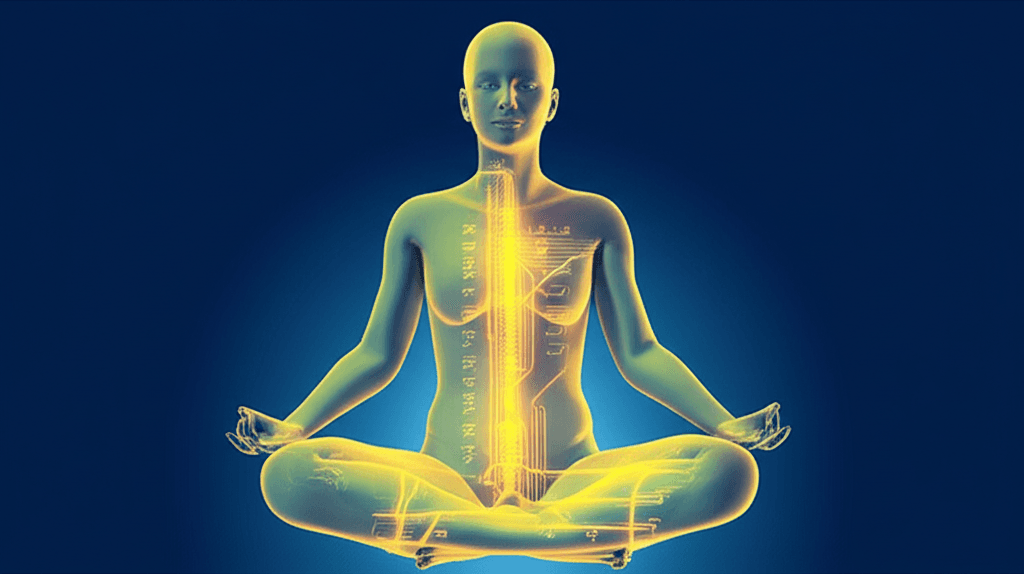
When you meditate, you retract your awareness from the physical character and begin traversing into higher planes of awareness. The higher the plane of awareness, the more access you have to the information and programs that are dictating your experience here in the physical.
Setting Intention
So the question is: What information do you want to look into?
- What experiences do you no longer prefer that you would like to change?
- What would you like to experience?
- Do you want to know and embody the truth of your own being?
All of these ideas are just some of the options available to you as intentions to set. Then we use the powerful tool of meditation to begin accessing this information and energy, so we can recode the programs in our mind.
The Highest Meditation
Perhaps the highest meditation, in my experience, is to meditate with a focus firmly fixed on the core of our being. That part of us that exists outside of space and time. The observer of all appearances.
If you can't immediately drop back from the physical mind into that pure awareness, which will likely be tricky at first, begin by meditating directly on your heart space.
I use the heart space as a focus for what I experience as Soul connection. This describes my contemplative practice, not a measurable frequency or an anatomical concentration of awareness.
Heart-focused attention is part of this contemplative approach. Other people may experience it differently, and no particular realization is promised.
Practical Applications
Another example: you can discover and recode faulty programs.
Let's say you have some form of addictive habit you can't seem to shake. It may feel connected to avoiding an uncomfortable state, but a personal reflection cannot determine the cause of an addictive habit. Addiction deserves appropriate professional support, not a promise that meditation will remove it.
Meditation can be used to notice a craving and the thoughts around it. That observation does not identify its origin or establish that an addictive pattern can be removed through meditation.
Noticing a craving is not a guarantee that it will disappear. If a habit is causing harm or feels difficult to control, seek qualified support rather than relying on this practice as treatment.
For a breakdown of what years of daily meditation actually produces, read I Meditated 1 Hour/Day for 5+ Years.
To trace specific patterns to their root, see The Golden Thread Technique.
Frequently asked questions
Does meditation work only when thoughts stop?
No. Returning attention after noticing a thought is part of this practice. A quiet mind or an intense experience is not required to make a short period of attention worthwhile.